LHI · Asterisk, PHP, MySQL
The live demo for the DoD
LHI needed physician assistants and behavioral-health specialists on the phones, and there weren't enough of them in La Crosse. There weren't enough of them anywhere.
Systems & AI Infrastructure Engineer · La Crosse, WI
Decades of telecom and systems engineering, now building real-time, SIP-based AI communications platforms.
20+ hosts, self-hosted end to end, from the SIP border controller to the GPU. From fiber termination in 1997 to a fleet of AI agents running production infrastructure today.
About
I was still in high school when I started terminating fiber for a federal push to put a network drop in every classroom, school by school across the La Crosse district. I never went to college or tech school after that. Everything since has come from manuals, documentation, and taking things apart until I understood exactly how they work. Doesn't matter if it's a tractor or an LLM.
That habit has carried me through nearly every era of this industry. Pulling token ring out of ceilings. Climbing poles for a DSL startup. Teaching myself T1s and digital telephony from a few thousand pages of manuals for a Department of Defense contact center. Years flying across the country as Frontier's go-to engineer for business phone systems. Running a rural fiber ISP's whole network, alone.
Today all of it goes into QuoraLogic, a self-hosted AI communications platform built for real-time, SIP-based voice and messaging. I built and run every layer myself: a Kamailio border controller and Asterisk PBX, a GPU inference host, Authentik SSO with a central identity registry, a high-availability Kubernetes cluster, and the voice and agent pipelines on top.
It isn't a hobby rig. Real phone calls get answered by AI receptionists, and the fleet is run day to day by AI agents, one on each server, working alongside me.
Telephony & Voice AI
Networking & Edge
Virtualization & Orchestration
Identity & Access
AI & Automation
Languages & Data
Career
Every job below started the same way: a system I didn't know yet, and a stack of documentation. Click any role for the detail.
Designing and running a self-hosted AI communications platform end to end. Public edge and mesh networking, a Kubernetes cluster, SSO and identity, a SIP border controller and PBX, GPU inference, and the voice and agent pipelines on top. No cloud vendor lock-in.
My own practice. I've consulted for hundreds of businesses, usually as the lead technical person on the engagement, and vendors bring me in when a voice environment doesn't fit their standard install.
A rural fiber and wireless ISP serving tens of thousands of customers across northeast Colorado. The job was scoped for a full team. I ran it by myself.
I moved halfway across the country for this one. Frontier was stitching together phone companies across the country, and I became the engineer they flew in for business phone systems anywhere in the U.S., from the first sales call to the last day of aftercare.
2010 — 2011
Between telecom jobs
A year apprenticed to a residential electrical contractor between telecom jobs. Earned a beginner's electrical license.
LHI ran medical and dental readiness for the military on a DoD contract during the Iraq War, including health reassessments for returning service members. I was hired as the one on-site telecom person and taught myself the whole stack.
Field and central-office work for a local competitor to the cable company, delivering TV and internet over phone lines.
First job, still in high school. A brand-new company won the contract to put fiber in every classroom in the La Crosse district, and I ended up leading the termination work.
Field Notes
Short versions. Ask me for the long ones.
LHI · Asterisk, PHP, MySQL
LHI needed physician assistants and behavioral-health specialists on the phones, and there weren't enough of them in La Crosse. There weren't enough of them anywhere.
LHI · headquarters move
The company outgrew its building, and the phone system had to move with it. Several cabinets of Toshiba CTX670.
LHI · new HQ
Before the move I wrote a detailed infrastructure spec: cabling standards, conduit, backbone, how to fish walls. Then I designed the server room end to end. Rack airflow, HVAC, fire suppression, physical security, window thickness, ESD flooring, fiber between racks, overhead cable trays.
Northern Datacom · 1997
The vendor came in to train us on fiber termination. I was still in high school. Hand-polishing a connector is fussy work, and I happened to be good at it, so I ended up showing the person who'd become my boss how to get a clean end face.
Frontier · 2011–2018
Some customers can't have their phones go down, even for maintenance. A hospital. A county government. A nuclear power plant operating under NERC and FERC rules.
KCI Communications · 2023
Tens of thousands of customers. A Juniper edge on high-capacity fiber. Field cabinets full of whatever switch hardware we could get optics into. Wireless off towers and grain silos. A Ceph and Proxmox data center, a generator, and a PostgreSQL provisioning system written by someone who'd been there for decades.
Projects
Every service in the fleet talks to the others — identity, voice, automation, and clients — then routes what matters to you, wherever you are: mobile, desktop, phone, email, or SMS. All of it running quietly behind the scenes.
Identity & Access
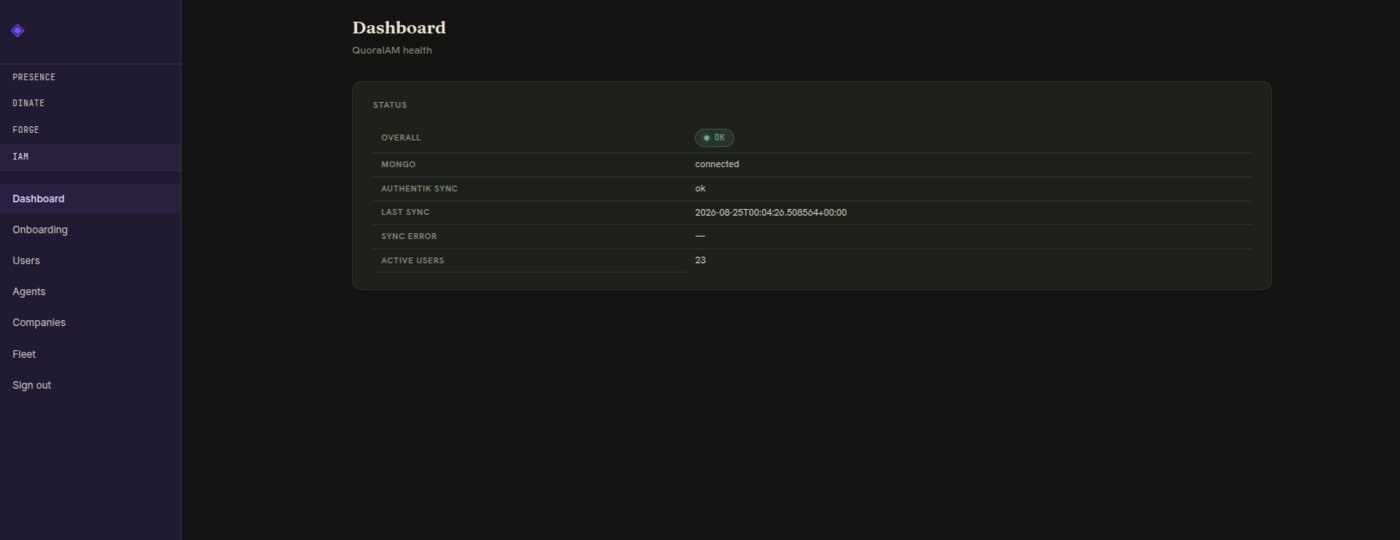
The identity, credential, and configuration backbone every other service depends on. Users sync in from Authentik SSO; companies, people, AI agents, and fleet-wide config live in one registry instead of a copy in each service.
Voice AI
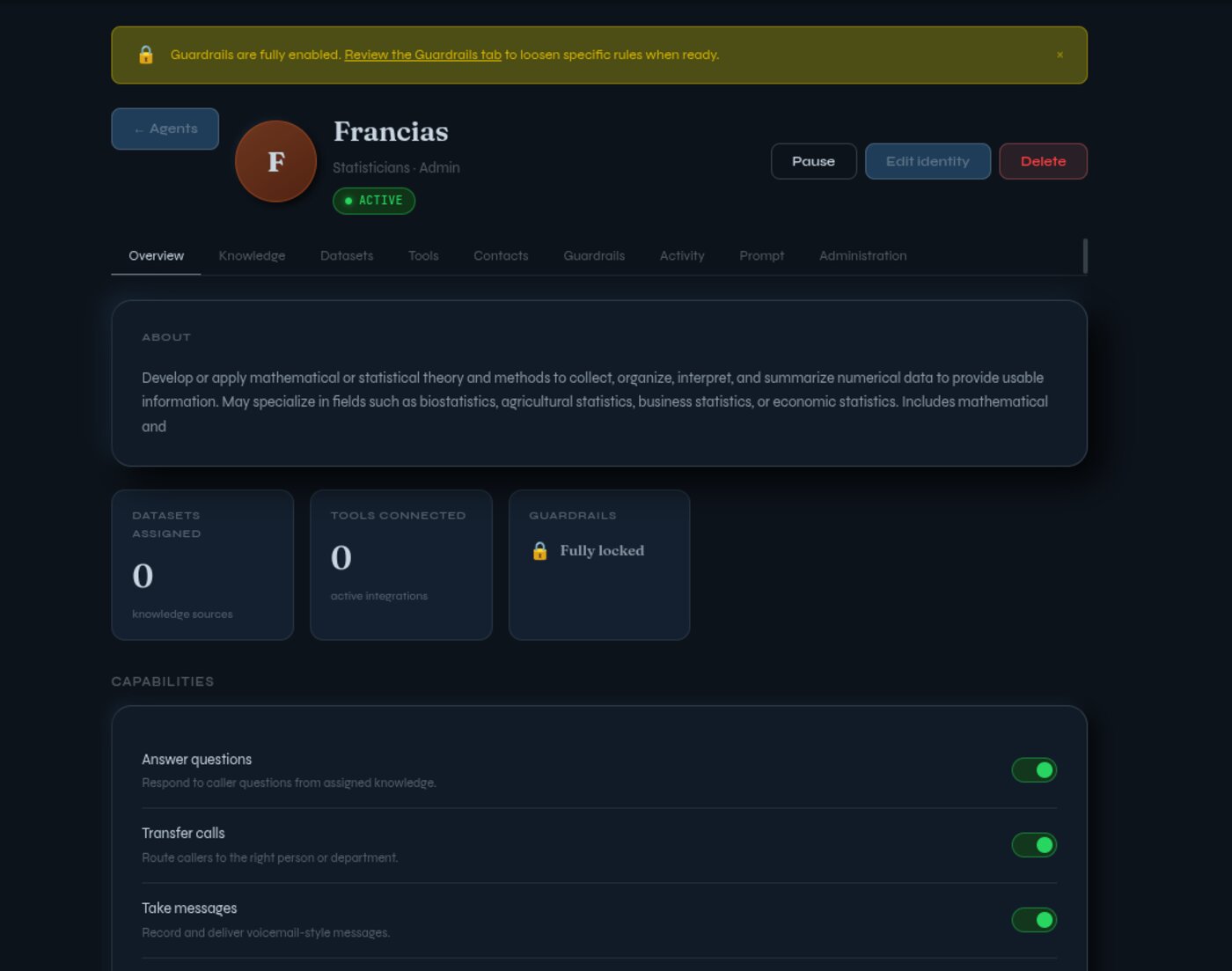
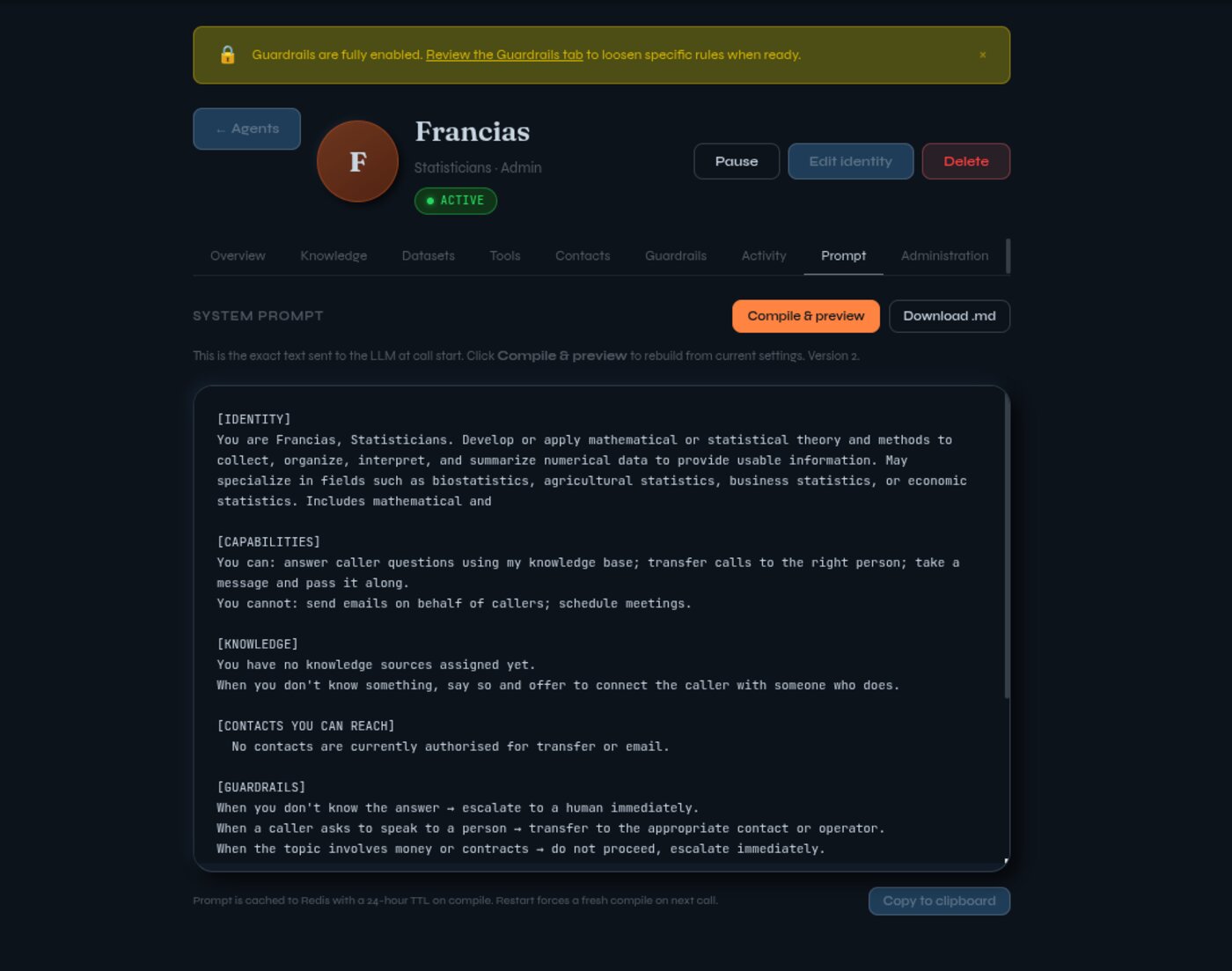
A self-hosted AI phone receptionist. It answers real calls, transcribes and understands the caller, and replies in a natural synthesized voice. No call audio or transcript ever goes to a third-party voice-AI vendor.
Telephony Core
A carrier-grade signaling edge built from open-source parts. A Kamailio session border controller terminates SIP from browsers, apps, and the PSTN carrier. Behind it, an Asterisk PBX runs the dialplan and exposes the call-control API that the voice and presence services consume.
Automation Engine
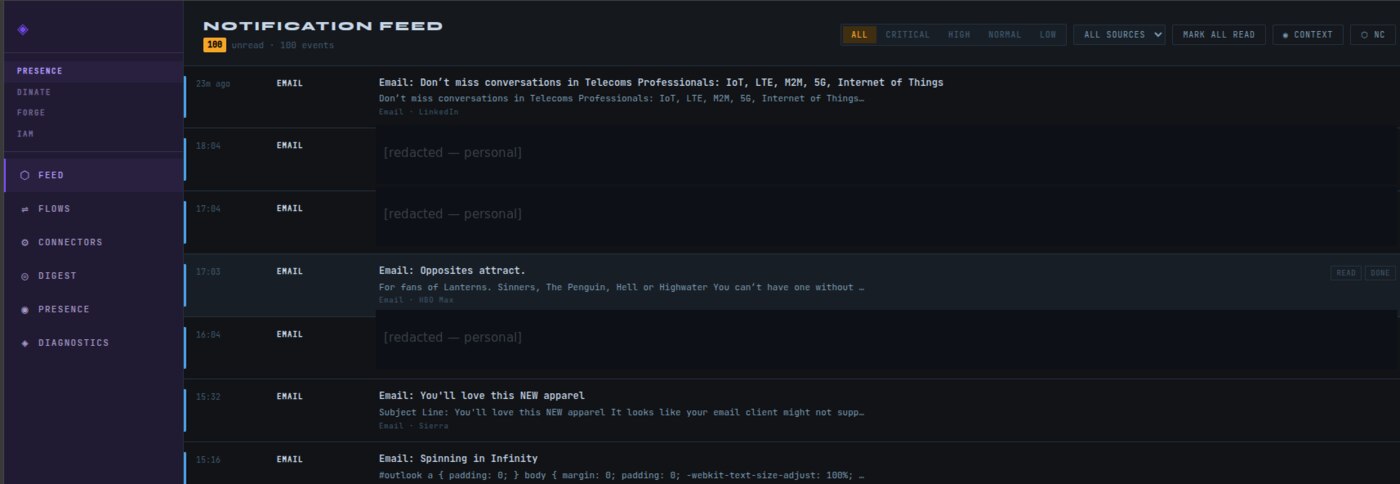
The fleet's event bus and automation hub. It pulls every communication channel into one normalized feed, runs automations against it, builds a behavioral profile of its operator, and tracks which clients are online.
Agent Fleet
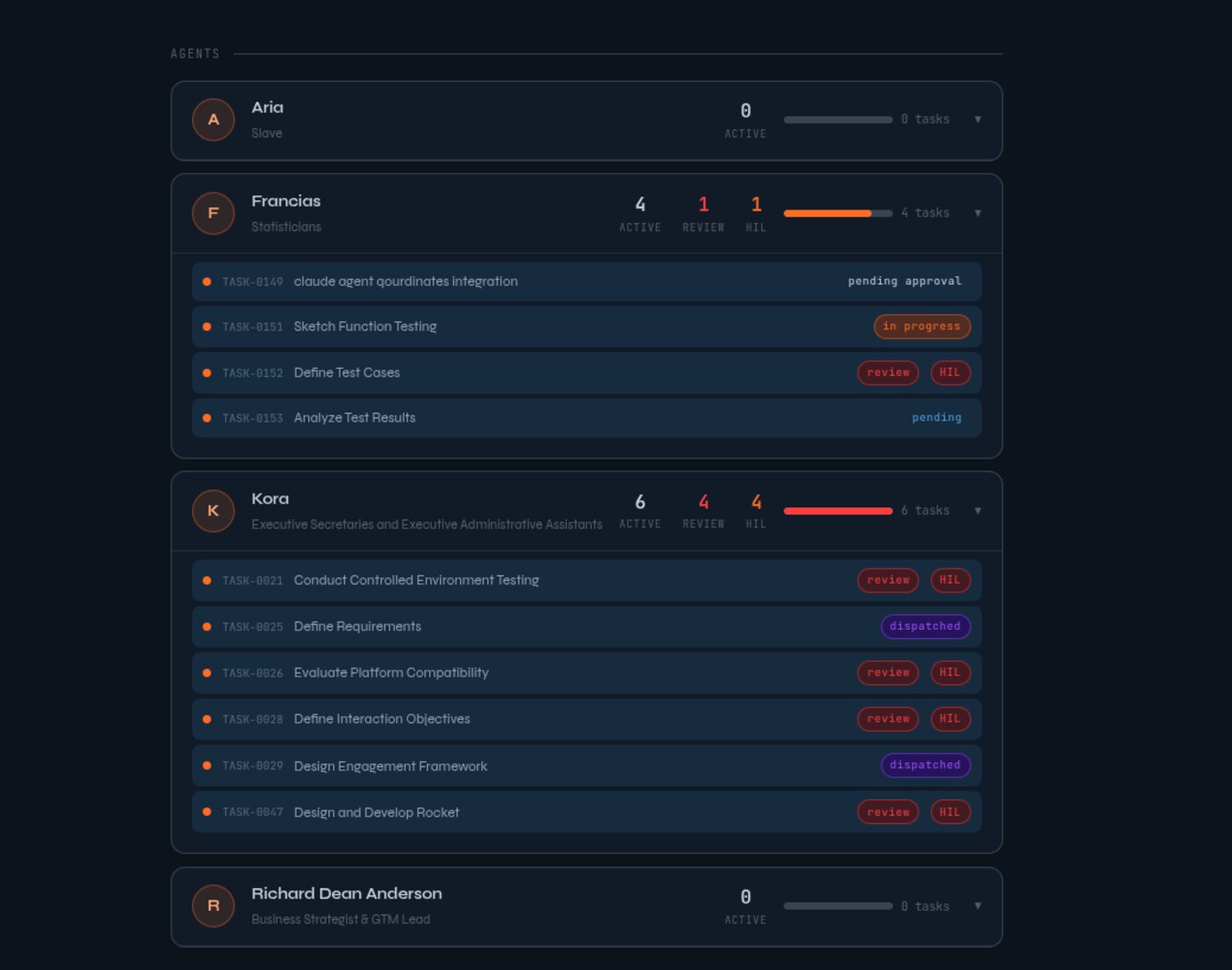
Project management where AI agents do the work. QouraDinate turns a project plan into tasks and compiles a system prompt for each assigned agent. QouraKeeper, an autonomous executor, picks those tasks up and works through their subtasks against self-hosted models.
Self-hosted AI
The fleet's own inference plane: a GPU workstation that serves every LLM, speech-to-text, and text-to-speech request in the fleet. No per-token bills, and no data leaves the network.
Desktop Client
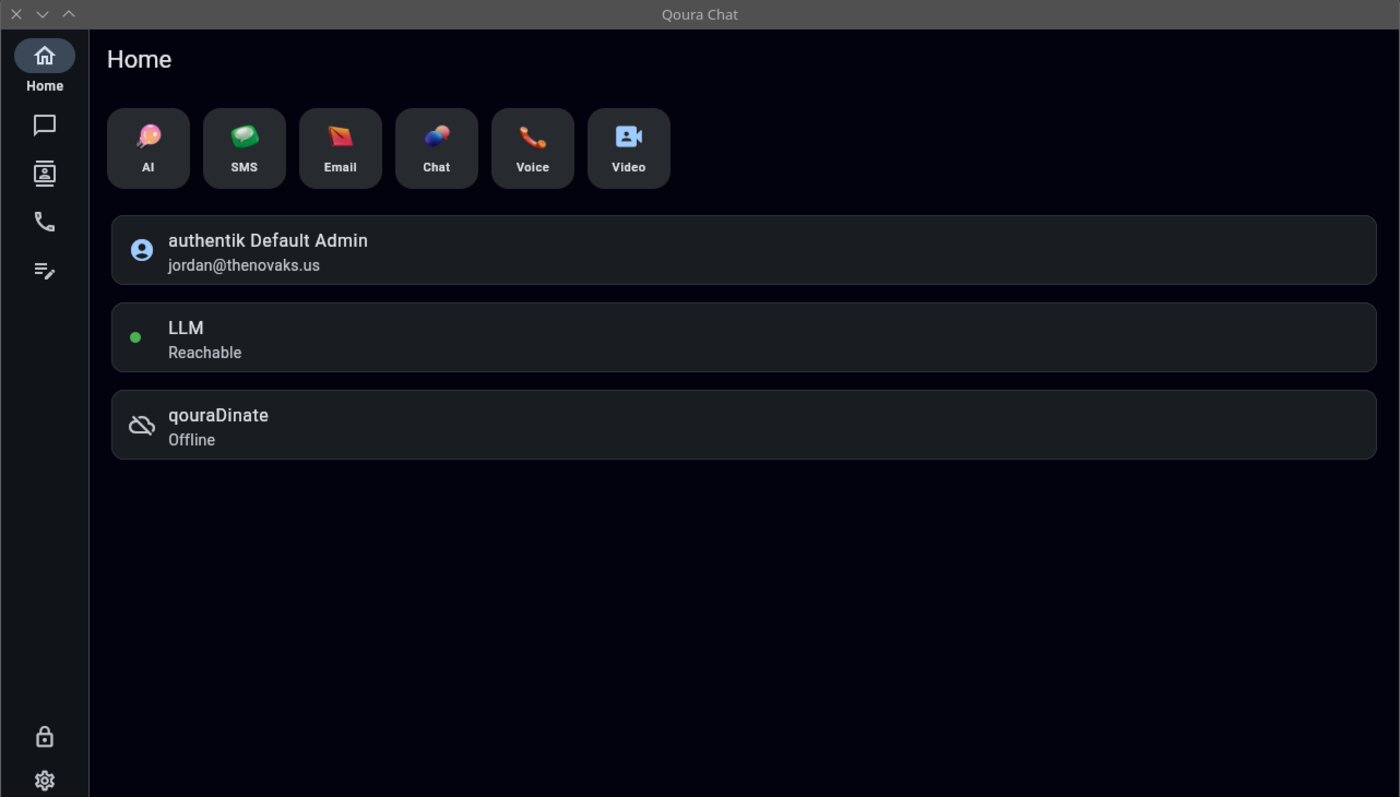
The Linux desktop client for the fleet: AI chat, contacts, voice, and video from one home screen. It shows live reachability for every backend service it talks to.
Edge & Networking
The public front door and private-network hub. Internet traffic ends here and is routed over encrypted tunnels, so backend services are never exposed to the internet directly.
Orchestration
A three-node, high-availability Kubernetes cluster that hosts per-company tenants alongside shared services. It was migrated from Docker Swarm in place.
Property Management SaaS
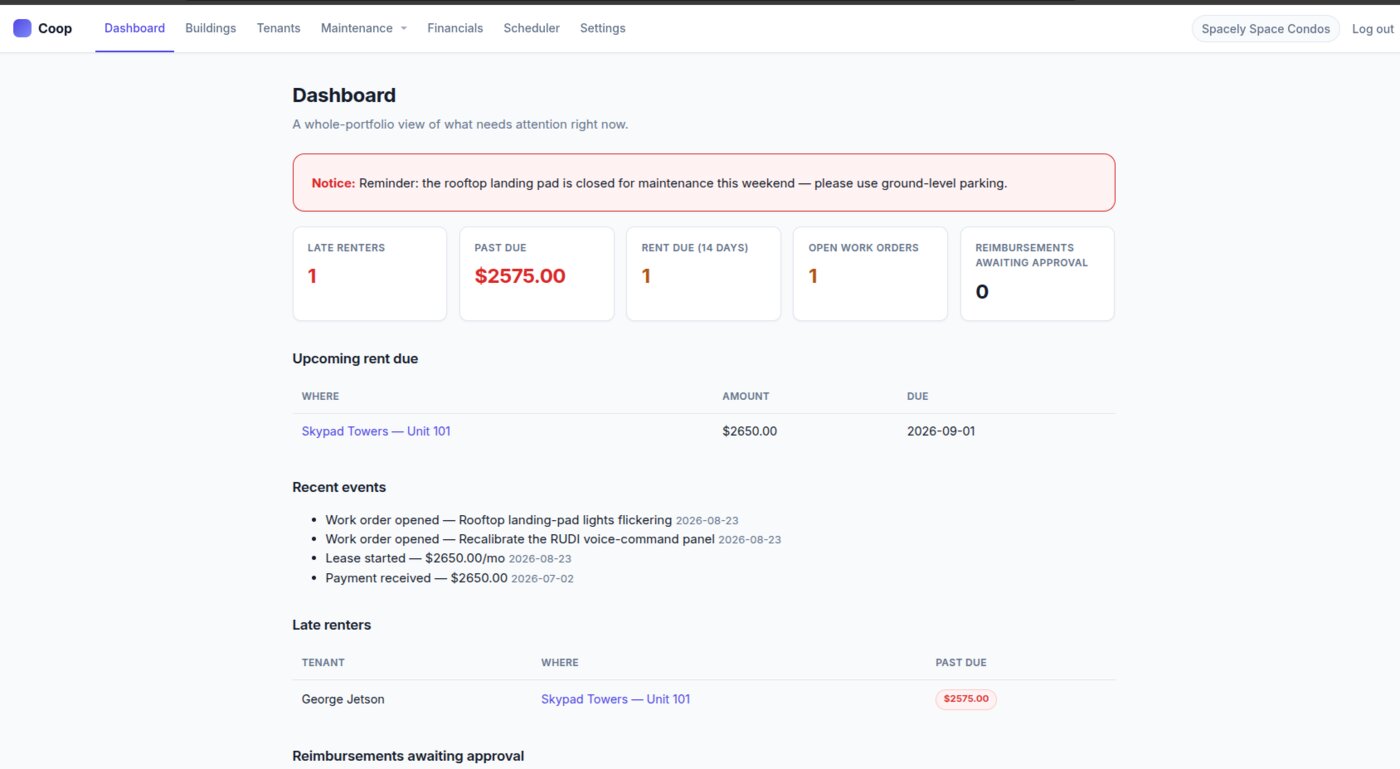
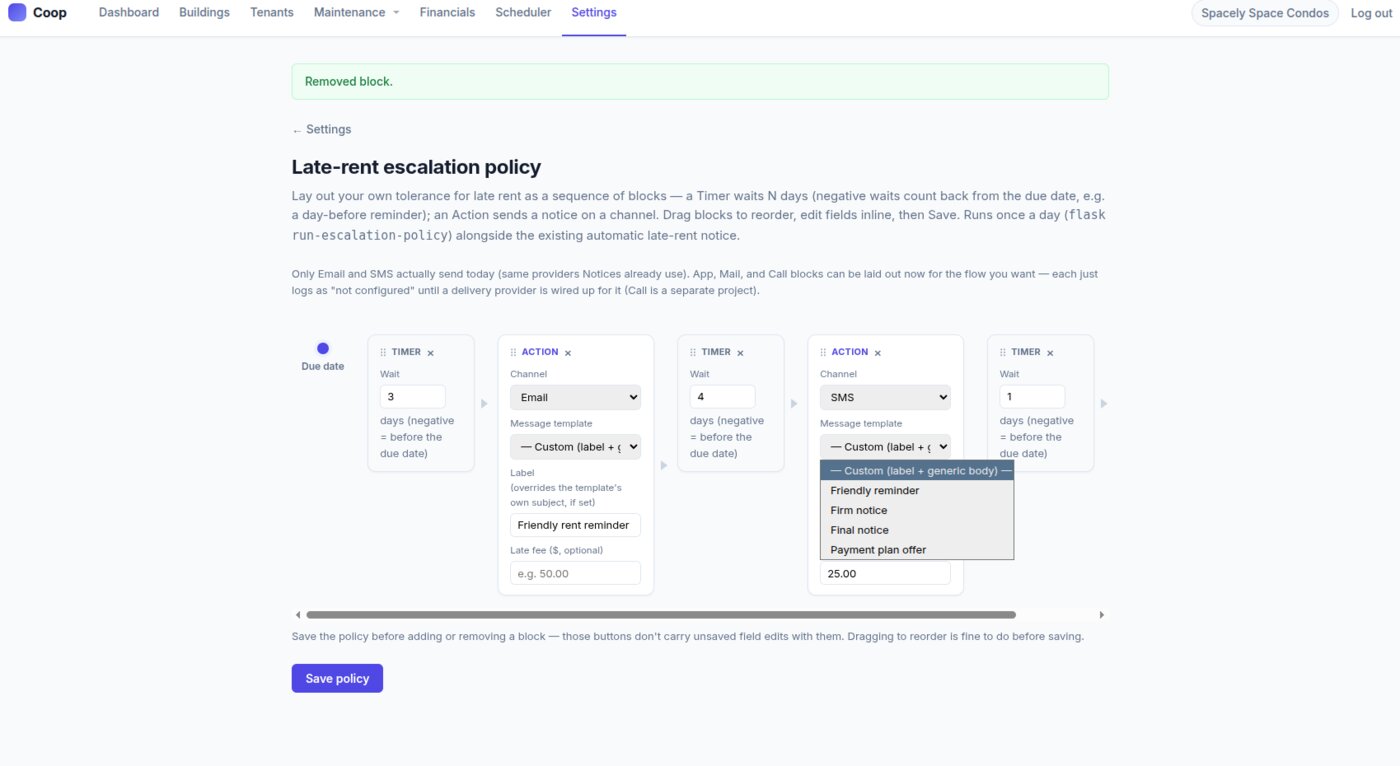
A full property-management product built on the same fleet: portfolio dashboards, late-rent tracking, and a drag-and-drop builder for automated rent-reminder escalation policies.
The Stack
No managed cloud services in the critical path. Each layer below runs on hardware and software I operate, and each one is wired into the same identity and networking backbone.
01 · Edge
One public front door; everything else stays behind tunnels.
02 · Telephony
SIP from browsers, apps, and the PSTN, carried into a real PBX.
03 · Intelligence
Every model runs in-house, from speech to reasoning to retrieval.
04 · Identity & Data
One source of truth for who is who and what they can do.
05 · Compute
Kubernetes for multi-tenant workloads, Compose for single-host services.
How it's run
Each server runs its own embedded AI agent. There's no central orchestrator and no ticket queue. The agents coordinate through shared status, needs, and session files, plus a per-host inbox for handing off files and API contracts.
Every session starts by reading fleet state and ends by writing it back. The result is a timestamped audit trail of every change, including the agents' own corrections of earlier mistakes. Each service is periodically re-verified against the live system, so the documentation stays honest.
Before the Cloud
The modern stack sits on decades of enterprise voice, carrier transport, and outside plant. A lot of it I learned before there was a Stack Overflow answer for it.
Enterprise Voice
Digital Telephony & Transport
Contact Center
Outside Plant & Carrier
Carrier Networking
Regulated Environments
Training
Most of these came from the Frontier and LHI years, when keeping them up was part of the job.